

 (Source: DepositPhotos)
3 Essential Steps to Building a Sustainable Supply Chain
1. Get Full Visibility of Your Supply Chain
You will not get far in improving the sustainability of your supply chain without first acquiring full visibility of how it currently works. The CDP example noted above is the leading example of the world’s industry giants working towards getting that visibility. You can acquire the necessary visibility by requiring your suppliers to disclose how they source, manufacture, and employ labor.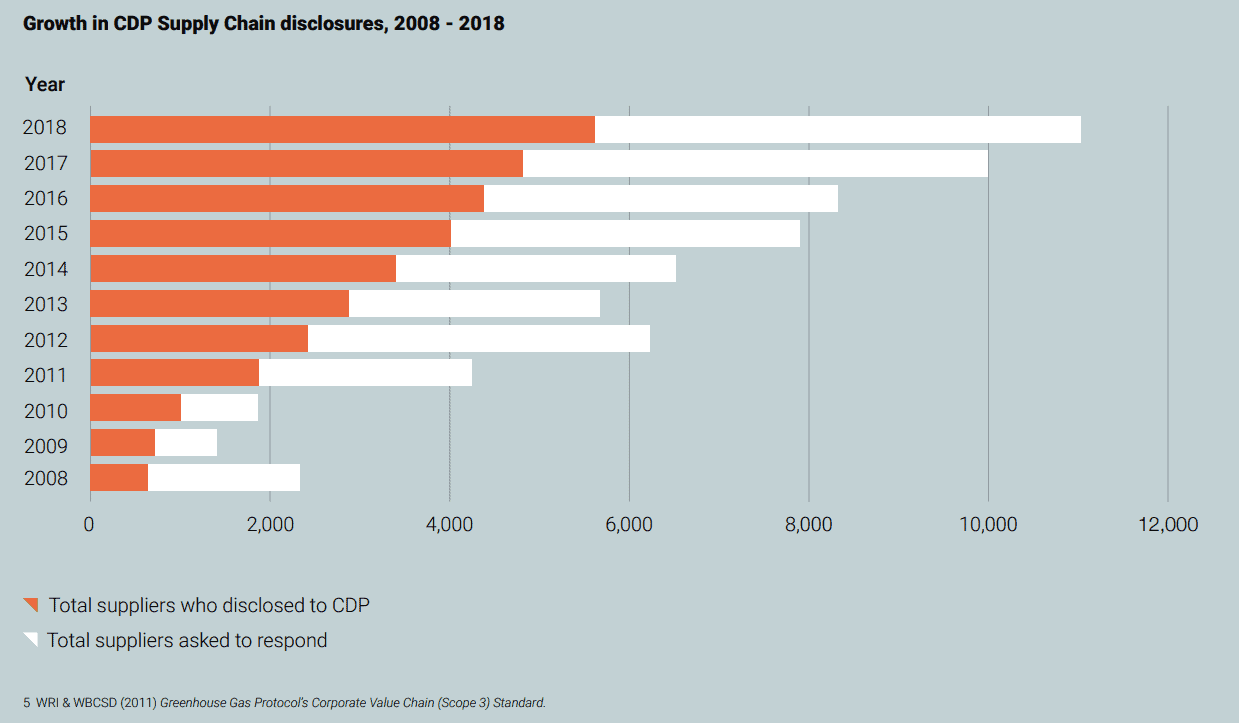
(Source: CDP)
You may also need to calculate your resource consumption via sustainability metrics, such as the carbon footprint, water footprint, and land footprint. If you can’t source that knowledge in-house, you can partner with outside organizations that will both help steward your sustainability efforts and lend it outside credibility.Waste is Sustainability and Profitability Problem We Can Help You Remove It.
2. Partner with NGOs
In addition to lending credibility to your efforts, partnering with non-governmental organizations (NGOs) -- such as the CDP -- can also help you find inefficiencies in your supply chain. How? Well, in many cases, the NGO might have a line of knowledge that your company doesn’t have. For example, Coke partnered with the World Wildlife Fund (WWF) to reduce the amount of water it used to produce a liter of Coke from 3 liters to 2.5 liters. However, Coke did not internally know that it was spending 200+ liters of water in just growing sugar. The WWF identified the issue and suggested that Coke change how it grew sugar cane, so as a result, Coke managed to reduce its water usage (Harvard Business Review). In terms of sustainable supply chains, such NGOs can help your business better understand its procurement from certain countries or suppliers. It can provide insight into the sustainability and ethical practices of those suppliers and, potentially, help you find alternatives. As with Coke and WWF, NGOs can also help improve your supply chain processes with new or outside ideas. For example, having your supplies run through land could cost more in fuel than using freighters at sea -- some NGOs can help find alternative routes.More Insights on How to Improve Your Supply Chain:
- 7 Key Advantages of Simulation for Business
- 4 Agent Based Modeling and Simulation Examples
- 5 Types of Inventory Management to Get Your Expense Under Control