

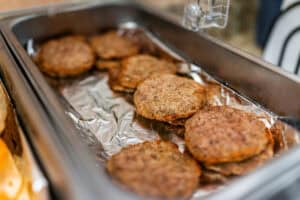
 Trays for cooked ingredients
MOSIMTEC has built hundreds of simulation models over the years to test various aspects of systems during the conceptual and design phases. It is also common for simulations to operate in real-time production systems to help predict the next production cycle. But what about the use case of leveraging simulation as a sales tool? In this case selling or buying equipment for restaurant operations. MOSIMTEC has worked with several clients to provide simulation models to assist with sales. These models help by illustrating a convincing story through a relevant example, often using animation. After all, seeing is believing.
Quick service restaurants (QSR) rely on an array of equipment to produce the menu items that are sold. Equipment is designed by vendors and sold to QSR companies. Once a QSR company has decided to adopt the equipment, the company often needs to convince franchisees (owners/operators) to invest during the deployment process. The financial cost of procuring the equipment is typically partly or fully the responsibility of the franchisee.
One of the most important equipment types in QSRs these days is the Product Holding Unit (PHU), or sometimes also referred to as a Universal Holding Cabinet (UHC). This heated cabinet holds an assortment of trays that contain precooked ingredients, often proteins. A specific number of trays is sized and assigned to a single ingredient type. These trays often drive the production system through cook request triggers when the trays become empty. This is the only time cooking is performed, so it is vital that the number of and sizing of trays is appropriate. The precooked ingredients are used to make menu items when they are ordered. This type of production system is referred to as a Make-to-Order (MTO) system. Cooked ingredients must be hot, fresh, and ready to supply menu items to satisfy customer demand.
Cooking and supplying product to the PHU is only half of the equation. Anyone in the QSR space knows that there are many factors that influence the draw rate of the cooked ingredients. Specifically, we are talking about the customer arrival rates and ordering profiles. Simulation allows for experimenting with any and all varieties of arrivals.
Trays for cooked ingredients
MOSIMTEC has built hundreds of simulation models over the years to test various aspects of systems during the conceptual and design phases. It is also common for simulations to operate in real-time production systems to help predict the next production cycle. But what about the use case of leveraging simulation as a sales tool? In this case selling or buying equipment for restaurant operations. MOSIMTEC has worked with several clients to provide simulation models to assist with sales. These models help by illustrating a convincing story through a relevant example, often using animation. After all, seeing is believing.
Quick service restaurants (QSR) rely on an array of equipment to produce the menu items that are sold. Equipment is designed by vendors and sold to QSR companies. Once a QSR company has decided to adopt the equipment, the company often needs to convince franchisees (owners/operators) to invest during the deployment process. The financial cost of procuring the equipment is typically partly or fully the responsibility of the franchisee.
One of the most important equipment types in QSRs these days is the Product Holding Unit (PHU), or sometimes also referred to as a Universal Holding Cabinet (UHC). This heated cabinet holds an assortment of trays that contain precooked ingredients, often proteins. A specific number of trays is sized and assigned to a single ingredient type. These trays often drive the production system through cook request triggers when the trays become empty. This is the only time cooking is performed, so it is vital that the number of and sizing of trays is appropriate. The precooked ingredients are used to make menu items when they are ordered. This type of production system is referred to as a Make-to-Order (MTO) system. Cooked ingredients must be hot, fresh, and ready to supply menu items to satisfy customer demand.
Cooking and supplying product to the PHU is only half of the equation. Anyone in the QSR space knows that there are many factors that influence the draw rate of the cooked ingredients. Specifically, we are talking about the customer arrival rates and ordering profiles. Simulation allows for experimenting with any and all varieties of arrivals.
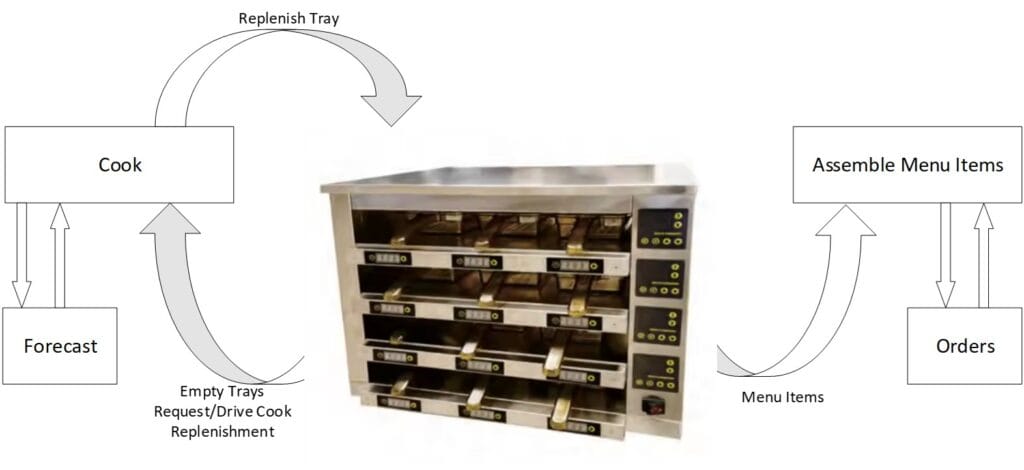 Cooking cycles in restaurants
In our experience with developing kitchen production models for several large QSR companies, PHU sizing is one of the most important components. A right-sized PHU with adequate hold times provides:
Cooking cycles in restaurants
In our experience with developing kitchen production models for several large QSR companies, PHU sizing is one of the most important components. A right-sized PHU with adequate hold times provides:
- Adequate cooked ingredients to meet customer demand, while limiting stock outs
- The right sizing the trays and their quantities prevent discards (expirations)
- Compatibility with batch-based cooking (one tray = one cook batch)
- Optimal hot and fresh ingredients for the menu items assembled
- Ergonomically correct designs and their placement speeds up menu-item assembly while minimizing stress on the crew
A Simulation Sales Tool Example
One important attribute of a PHU is the ability to keep cooked ingredients hot and fresh for a reasonable amount of time. Obviously, if a vendor develops a PHU that extends the hold time, that would be, well in a word, “better”. Just saying something is “better” does not prove it actually is. This is where sales tools come in. We took our experiences and developed a simplified simulation model example to illustrate our point. Unlike most simulation models, this one executes two simultaneous experiments side by side to compare two different PHUs. Both receive the exact same customer demand and produce the same cooked ingredients. The only difference is the duration that a PHU can keep ingredients hot and fresh (also referred to as hold time). The model simulates a period of two hours and tracks:- Number of trays produced
- Amount of cooked ingredient discarded due to expiration
- Number of times there was a stockout by ingredient
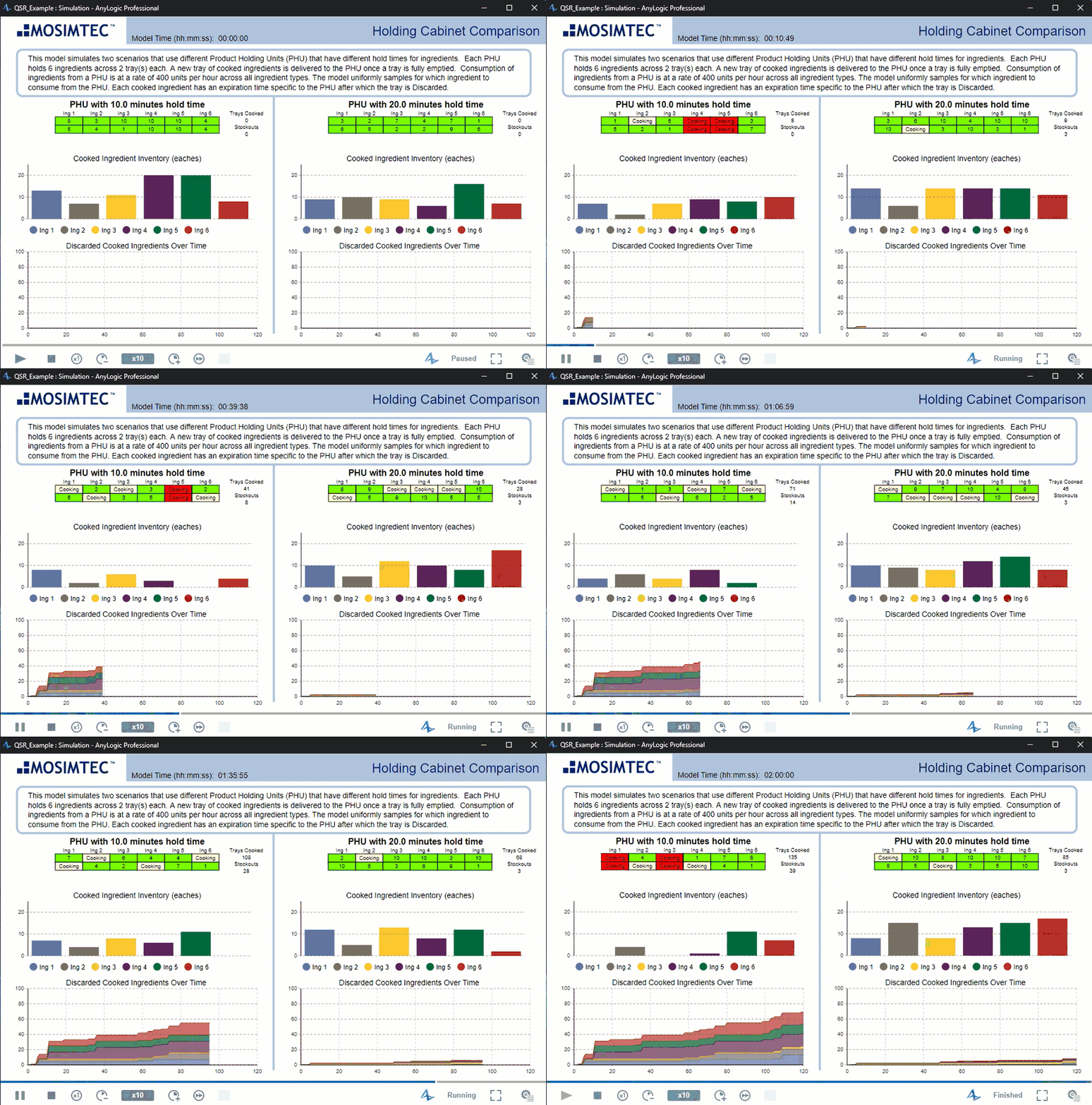 Product Holding Unit (PHU) comparison
The simulation model shows the benefits of longer hold times. The longer hold time results in about an 85% reduction in wasted ingredients. Longer hold-times resulted in 50 fewer cook-cycles over a two-hour duration. This translated to savings of raw ingredients, lower cooking equipment usage, and lower crew usage. If each ingredient costs $0.20, then the total food saved would be $90 for an 18-hour day or $30,000 per year. In more complex models, we would allow for configurable inputs for each of the ingredients: different cooking processes, cooking times, and expiration times.
Users can try different inputs and run the model themselves through via this link: Holding Cabinet Comparison Model. The video below illustrates how to use the model. Here, we changed the capacity of the trays from 10 units to 8 and increase the production time from 4 to 5 minutes.
Product Holding Unit (PHU) comparison
The simulation model shows the benefits of longer hold times. The longer hold time results in about an 85% reduction in wasted ingredients. Longer hold-times resulted in 50 fewer cook-cycles over a two-hour duration. This translated to savings of raw ingredients, lower cooking equipment usage, and lower crew usage. If each ingredient costs $0.20, then the total food saved would be $90 for an 18-hour day or $30,000 per year. In more complex models, we would allow for configurable inputs for each of the ingredients: different cooking processes, cooking times, and expiration times.
Users can try different inputs and run the model themselves through via this link: Holding Cabinet Comparison Model. The video below illustrates how to use the model. Here, we changed the capacity of the trays from 10 units to 8 and increase the production time from 4 to 5 minutes.
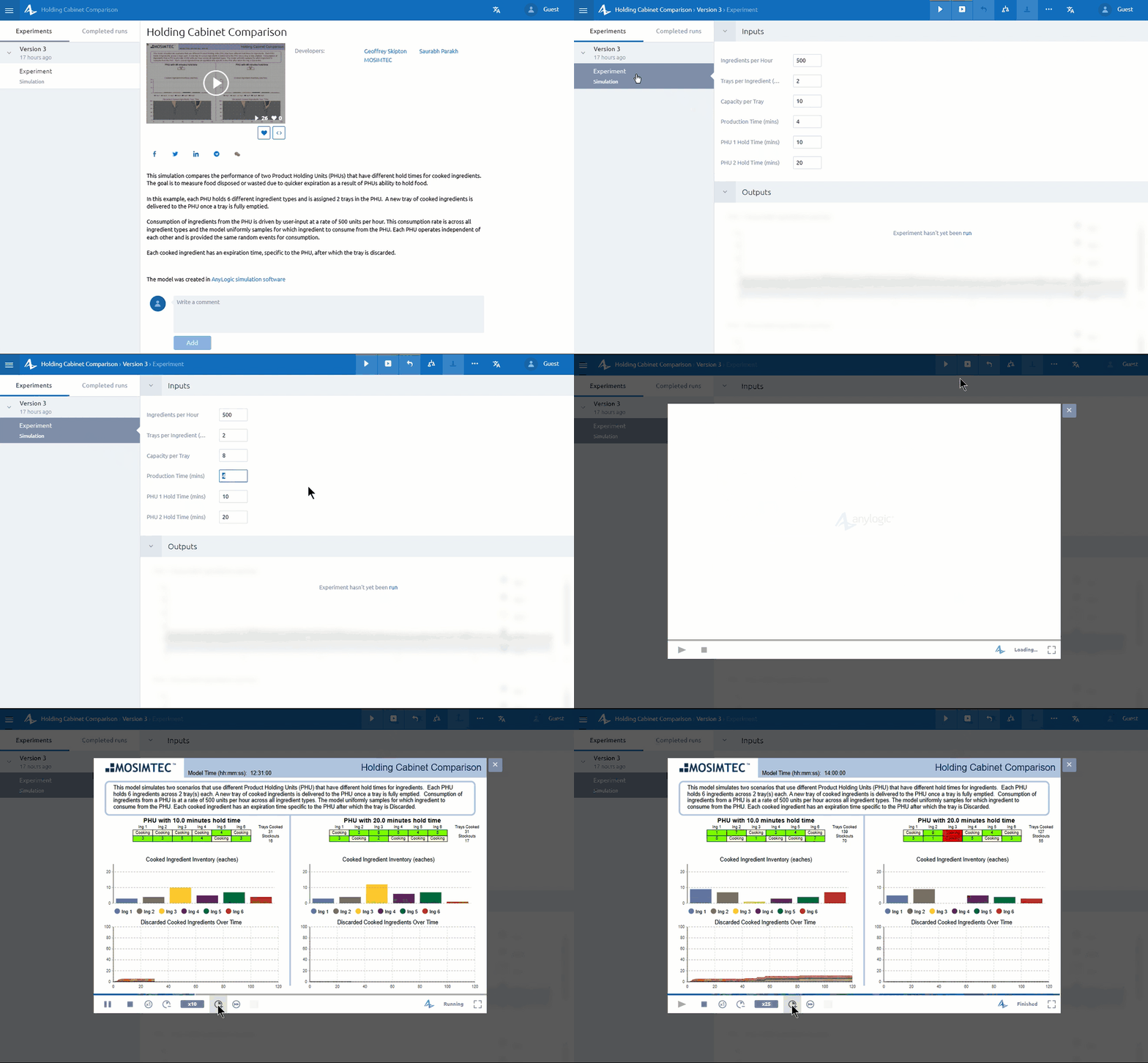 Experiment with changing product hold times
The simulation, was developed using AnyLogic simulation software and deployed to the AnyLogic Cloud, which allows you to adjust several system conditions, such as product hold times and number of trays per ingredient. You can also adjust the capacities of the trays and demand for ingredient (Ingredients per hour) from holding cabinets. Run the model by hitting the play button and watch the animation comparing the two equipment types.
Experiment with changing product hold times
The simulation, was developed using AnyLogic simulation software and deployed to the AnyLogic Cloud, which allows you to adjust several system conditions, such as product hold times and number of trays per ingredient. You can also adjust the capacities of the trays and demand for ingredient (Ingredients per hour) from holding cabinets. Run the model by hitting the play button and watch the animation comparing the two equipment types.
Interactive Simulation Model